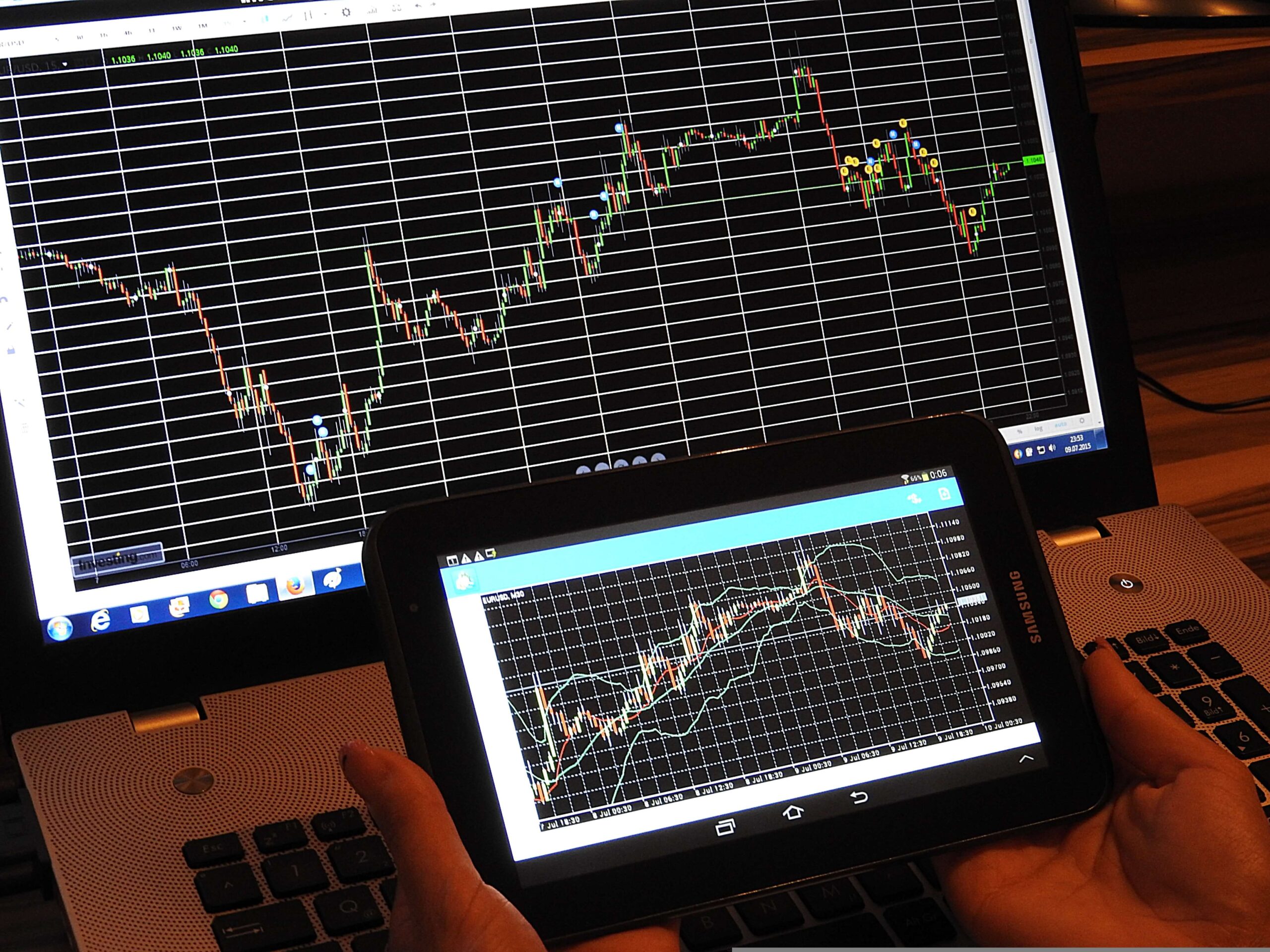




Financial latency is the gap between something happening in a business and the business being able to know what it meant. In a multi-channel product brand the gap is structural rather than clerical: no single system in a conventional stack holds every piece required to compute the true number, so the number exists only after a person assembles it by hand.
The condition, before the name
A brand sells through its own store and two or three marketplaces. It buys or makes what it sells. It holds inventory at a third-party warehouse. The stack looks reasonable from the outside. The storefront and the marketplaces know what sold. A separate tool tracks inventory. The accounting system knows what hit the bank.
Nothing in that arrangement is negligent. Every piece was chosen sensibly, at the moment it was needed, to solve the problem in front of the business that quarter.
And yet the following are all true at once. Nobody can say what a given channel actually made last month, net of fees, freight, and returns, without building it. The inventory count in the system has not matched the shelf in a year. Cash position between marketplace payouts is an estimate. The close is something the business waits for rather than something it has.
The instinct is to read this as a discipline failure. Someone is behind. The bookkeeper needs more hours. The process needs tightening. That reading is wrong, and it is expensive, because it sends the business looking for a fix in the one place the fix does not exist.
Why the gap is architectural
The true picture of a multi-channel product brand requires a chain of facts that no one system in the stack holds.
Start at cash going out. A payment left the bank for a purchase order of raw materials. Those materials arrived on a container whose freight and duty attach to them at some real cost. They were consumed in a build that also consumed labor, and that build produced a finished unit. The unit sat in a warehouse. It sold through a marketplace, which took fees, and settled days later in a payout that netted several things together, possibly including a return from a different order entirely.
To know what that unit actually earned, a system has to hold every link in that chain and the relationships between them. The storefront holds one link. The inventory tool holds another. The bank feed holds the last one. None of them holds the chain.
So the chain gets assembled by a human, in a spreadsheet, after the fact. That assembly is the latency. It is not slow because the person is slow. It is slow because assembly is the only mechanism available when the connections were never recorded in the first place.
This is why adding another tool does not close the gap. A third system adds a fourth link to hold and a third boundary to keep in agreement. The assembly gets longer, not shorter.
The distinction that matters
Late numbers and unknowable numbers look identical from the outside, and they are entirely different conditions.
A late number is one the system could produce, and has not yet. It responds to effort. More hours close the gap.
An unknowable number is one no system in the stack was ever able to compute, because computing it requires connections none of them recorded. It does not respond to effort. More hours produce a better reconstruction of the same incomplete picture.
Most of what a growing multi-channel brand experiences as lateness is the second kind. That is the practical test of whether latency is structural: if the business threw twice the labor at the close and the answer got faster but no more trustworthy, the problem is architecture.
Where latency stops being an inconvenience
For a while the cost of latency is friction. Days lost. Decisions made on a feeling. A pricing call that turns out badly, or an inventory buy against numbers that were three weeks stale.
Then something external asks for the numbers.
A lender underwriting a facility. A trade credit insurer setting a limit. An acquirer running diligence. An auditor. Each one asks for financials the business cannot produce cleanly, and the answer is not “give us a week.” The answer is that the numbers were never held in a form anyone could produce on demand.
The cost lands in terms rather than in hours: worse rates, a cut credit line, a lower multiple. The numbers a brand most needs are exactly the ones a disconnected stack was structurally unable to produce, and the moment of maximum need is the worst possible time to discover that.
What removes latency
Latency ends when the connections are recorded as the business runs, rather than reconstructed afterward.
That is the design behind Focal. Fragmented data across sales, inventory, and banking is ingested into one place. A structured model holds how those facts relate: which cash outflow paid for which purchase order, which materials became which finished unit, which order sold it, which payout settled it after fees. Operations, financials, and forecasting then run continuously off that model.
Because the transformation is deterministic, a stock movement is a defined ledger entry, always, rather than a value a model inferred. For an accounting system that is the point. A CPA does not want a probabilistic cost of goods sold.
The practical result is that the numbers are already true when a decision needs them. Nothing is assembled, because nothing was ever taken apart. Focal removes the concept of a month-end close, because the close was only ever the labor of assembly.
The short version
Financial latency is the distance between an event and the business understanding it. In a multi-channel product brand that distance is created by architecture, not by effort, and it closes only when operations and financials become the same record.